CW: Death and gore
Scrolling through Twitter the other day, I noticed “TikTok Decapitation” was trending, and I tapped on the hashtag. Tweets described a TikTok video to look out for and report–a girl dancing and then being beheaded. I cast my phone aside; I’m not on TikTok anyways.
Today, I noticed that same topic was trending as a Google search: “TikTok beheading Vimeo,” which suggests that people are seeking out the video, probably blocked on YouTube but uploaded to Vimeo. My question is why?
People’s attraction to gory media is not new. TV networks like ID dedicated to true crime shows and documentaries, rogue YouTube uploads before things were more tightly monitored (i.e. Saddam Hussein’s execution as stated by Hilderbrand in the “Clip Canon”), and even unmoderated chatrooms like Omegle back in the day were frequent sites of death pranks.
Lately, it seems like every time a person is killed by the police, people eagerly wait on the body cam footage to be released under the pretense that they wish to decide whether or not the extrajudicial killing of a citizen by the authorities was warranted. I think people are so desensitized, that in reality they are waiting at the chance to watch a citizen get killed by people in power.
I don’t know when we started commodifying the death of real people and using that to entertain ourselves, but at some point we have to remember that it is still a murder we are witnessing, despite sitting comfortably behind a screen.
Back in 2018, mega-YouTuber Logan Paul posted a video of him trekking through Aokigahara forest in Japan–a site of frequent suicides. Paul took a video of a hanging body, joked about it, and uploaded the video to his channel. The video was subject to immense backlash, and Paul took it down before issuing an apology. And yet, three years later, he has 23 million YouTube subscribers, a net worth of $19 million, and we all had to hear about his fight against Floyd Mayweather.
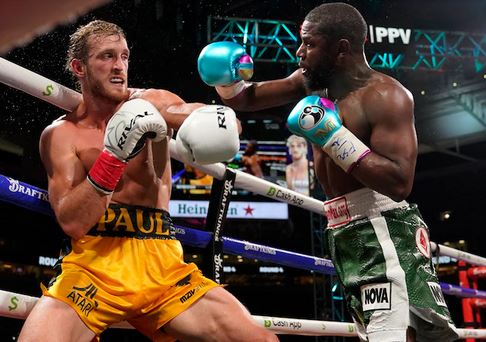
It is egregious that Paul still has a platform this big after multiple transgressions, especially the one where he used someone’s unimaginable pain and suffering as a way to build his brand. Of course, Logan Paul, similarly to Armie Hammer, has been absolved because of his positionality and privilege as a rich white male. And because people seek out this genre–true crime, true murder, true “controversy”–whatever it is.
There is a great difference between a fictional Sherlock Holmes mystery, and watching someone die on camera in real time, and we better catch ourselves forgetting about that difference soon.

2 replies on “When Media Makes Us Monsters”
I think this perspective that you are taking is something very new for me. To begin with, I have noticed that social media platforms now and days and very — let’s just say, could be determential in many ways. In the case that you are talking about, people are watching a lot of violent things and are enjoying it. While reading your post, I had to think very hard on why I haven’t noticed this then. But came to the realization that the algorithms come into play. I have watch so many things catered to my liking that, it is the only things that pop up on my social media. For example, my tik tok has now been transformed to Chrisitan tik tok. Instagram is filled with Business and social influencers. This blog post made me realize that we aren’t all scrolling on the same thing.
You’ve raised some very interesting questions in this post… I certainly have noticed a simmilar trend towards dehumanization and I wonder the extent to which modern media engagement plays a role. Ultimately, I think this shift can be largely attributed to just the platform of the internet. There’s a perceived anonyminity which brings out the worst in people, as demonstrated on a small scale by something Facebook comments. We see a simmilar “loss of humanity” in any setting where there’s this perceived protective bubble, road rage for instance highlights how even a slight removal from face-to-face interaction can lead to fundamentally antisocial dehumanizing behaviour. Understanding this “bubble” can help contextualize patterns of engagement on platforms like Youtube or TikTok. In becoming a viral celebrity or a trending topic, there is a lost sense of humanity – a fundamental shift in the way we think about the person and their actions that face-to-face interaction would circumvent. Furthermore, in the role that these influencers and youtube stars play, they’re often held in comparison to actors or industry celebrities, which also changes our expectation of content. We’re used to seeing violence and gore on something like Game of Thrones, and in purely visual terms, something like Logan Paul’s video of the suicide forest is frankly less eggregiously gore-ey than the death of Viserys Targaryen. Of course one is a real person who has actually died, and the other is simply high production acting, but in this media landscape removed from the humanity of the people on screen, it’s easy to understand how people could overlook Logan Paul’s horrendous video. There’s always some draw towards the morbid, and even in the earliest days of the internet sites like LiveLeak have demonstrated this morbid curiousity. However, it feels like that morbid nature of internet culture has seeped out from its quarentined isolated sites, and is permeating through all content platforms. There’s also something to be said about the use of social media by groups like ISIS, which perhaps set a precedent for exposure to this graphic content in otherwise normal settings… There’s a lot to unpack here for sure, lots of ways to analyze this shift and think about where it came from and how it happened. In the meantime however, I hope that there can be some return to civility and humanity on the internet. That’s probably just wishful thinking, but I’m curious how that could be done…