I have finally joined the Doctor Who bandwagon. I watched, and enjoyed, the first few seasons in high school, but once the show was taken off Netflix, I quickly fell out of touch with it. Despite the “accessibility” of streaming services, it wasn’t until I was aimlessly scrolling through HBO Max the other night that I found Doctor Who listed and decided to jump back in. I first started watching Doctor Who because I love all things fantasy and sci-fi, and throughout the first few seasons (referring to the 2005 reboot), I received exactly that: a man travels through space and time facing new and exciting obstacles in each episode, all with his love interest by his side.
Doctor Who, however, has one of the largest television fandoms and the opinions and desires of these fans have had a large impact on the show since its release 16 years ago. Within the past few seasons, the attempts by the show’s producers to adapt to their audience’s growing size and diversity has become more than apparent. Though there is still some work to be done in introducing minority characters in a natural way, there is undoubtedly more representation – both with gender and race – than there was in the earlier seasons.
This shift, as Jason Mittell discusses in “A Cultural Approach to Television Genre Theory”, represents the shift in genre characteristics due to cultural changes. Fans play a major role in this process, as fan accounts and social media threads give them platforms to transform shows, rather than continue to affirm current storylines. Ultimately, these shifts result in a general genre hybridization, where all of the cultural elements fans express interest in merge into one.
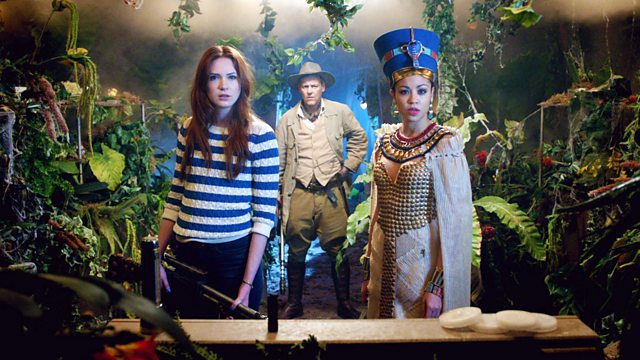
The most recent episode of Doctor Who that I watched exemplifies this convergence. The episode has sci-fi, horror, humor, and romantic components all within the hour runtime, but the most modern message lies in Amy Pond’s agency. The Doctor refers to both Amy and her husband as Pond, which is her maiden name, putting Amy in the dominant position in their relationship. This is directly juxtaposed by Queen Nefertiti’s treatment by the episode’s antagonist. He constantly refers to her as a “possession” that “needs breaking in”. The Doctor and his companions ultimately rescue Nefertiti, but the overall female prominence in this episode defies the previously dominant masculine subculture of Doctor Who. Instead, the show’s female audience is acknowledged, an audience that comprises a large portion of the evolving culture surrounding the traditional sci-fi genre.

One reply on “The effect of a fanbase”
Brooke-
I’m so glad someone wanted to talk about this! Just like you, I was a high school fan of Doctor Who. Thanks to your post, I may have to look into it over the summer. There is something about a British space alien solving the galaxies biggest, campiest issues in under 45 minutes that is just so comforting (i.e: the episode you reference features dinosaurs on a spaceship!)
Given its long history, it’s no surprise that Doctor Who has an avid and devoted fanbase. Having first aired on the BBC from 1963 to 1989 before being rebooted in 2005, the fanbase has had a verrrrry long time to get used to the canon of a white lanky British man (generally) saving one part of the British Isles over and over.
So, in 2018, when actress Jodie Whittaker was announced as the next and first female Doctor, the internet lost its mind. Could a woman be the doctor? Was the casting of this LADY simply for diversity points? How could this crazy thing happen in a show where time travel and aliens are the main schtick?
Unsurprisingly, Doctor Who survived the fall out. Now, as the franchise looks to cast the next Doctor, my hope is maybe this time their casting call might extend more firmly outside of the straight, white, lanky British variety.